Customer Photo - Scruffie

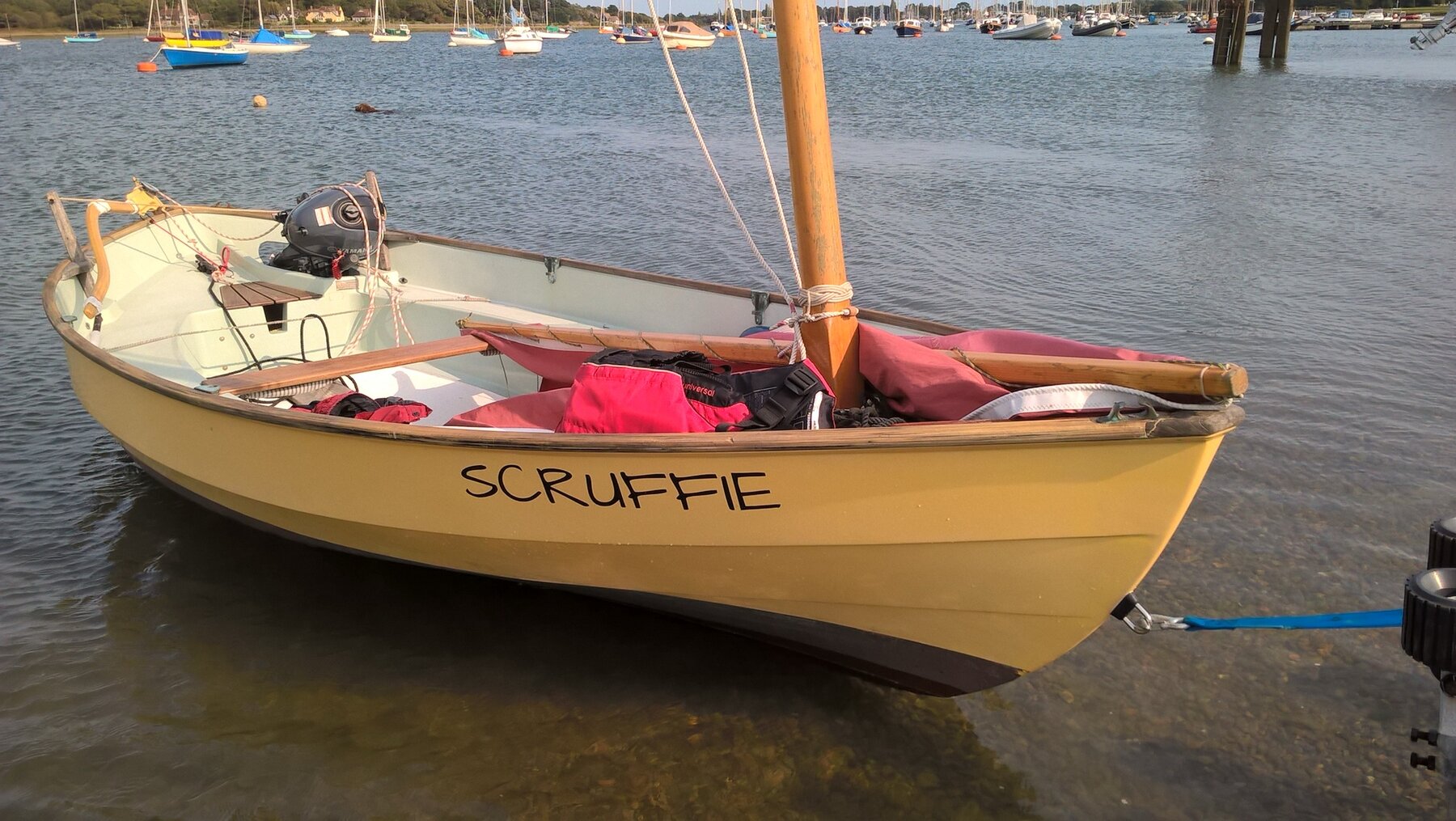
A dinghy name needs to be bold, easy to read from the shore and right for the boat. Scruffie, a small yellow sailing dinghy with an outboard on the transom, gets it right. The name is cut from black vinyl in a relaxed, slightly wobbly upper case that suits it perfectly. Thank you to the owner for sending us this photo of the fitted name.
Why black vinyl works on a yellow dinghy
Contrast does most of the work. Black on a pale or bright hull stays readable at a distance and in poor light, and it doesn't fade into the water or the sky the way a mid-tone colour can. On Scruffie the letters sit in the clear space between the gunwale and the waterline, so nothing competes with them.
The same rule applies to most dinghy colours. Black or dark navy suits white, cream, yellow and light grey hulls. White or a pale colour works better on dark blue, green or red.
Choosing a font for a small boat name
A dinghy is small, so the lettering needs to be simple. Thick, even strokes cut cleanly and stay legible. Very thin or highly decorative fonts can look fussy at dinghy scale and are harder to apply neatly.
Scruffie's lettering is light, hand-drawn and informal, which suits the name. It works because the letters are large and the contrast is strong. A traditional boat with varnished timber might suit a classic serif instead. Try a few before you decide. Seeing your own name in each style settles it quickly.
How big should a dinghy name be?
Most dinghy names look right between 50mm and 150mm tall, depending on the length of the name and the room on the hull. A short name like Scruffie can go larger than a long one. Measure the clear flat area on the side of the hull, leave a margin at each end, and keep the baseline parallel to the gunwale rather than the waterline, so it looks straight from the shore.
Most dinghies carry the name on both sides of the bow. Many owners also add it to the transom, particularly if the boat is kept on a mooring or in a busy dinghy park.
What the vinyl is made from
Our boat names are cut from premium grade polymeric marine vinyl, which is built to cope with salt water, sun and regular washing. It stays flexible on gently curved hulls, which suits the shape of most dinghies, and it lasts for years when applied to a clean surface.
Applying a name to a gelcoat or painted hull
- Wash the area, then wipe it with isopropyl alcohol to remove wax and grease.
- Mark a level guideline with masking tape and fix the name in place with tape across the top.
- Peel back the backing paper, apply from the centre outwards and squeegee firmly.
- Peel off the transfer tape slowly at a sharp angle, pressing down any edge that lifts.
Avoid applying in cold or damp conditions, and leave the boat dry for a day before launching.
Design your own dinghy name
Type your boat's name into our lettering designer, try different fonts and colours and see how it looks before you order. If you'd like help with sizing or placement, or you have a design that isn't in the tool, get in touch and we'll sort it out with you.
About the Author

Related Products